OpenAI's Pivot to Rent-Seeking and the 2026 Local Inference Stack
In the current enterprise landscape, the shift from software as a utility to software as a stakeholder is creating unprecedented challenges for corporate IP strategy. Recent maneuvers by major labs to implement "Discovery Revenue" models signal a fundamental change in how AI providers view their relationship with end-users. At Dominic Marrocco, our team views these developments not merely as a pricing shift, but as a strategic risk that necessitates a transition toward localized, sovereign infrastructure.
The emergence of ad-integrated models and potential royalty claims on AI-assisted breakthroughs has bifurcated the market. On one side, we see subsidized, black-box environments; on the other, a high-performance local stack that ensures data integrity and ownership. This technical brief outlines how professionals can leverage Flux.2 Klein and LTX-2 optimizations to maintain a competitive, independent edge while adhering to industry best practices for local inference.
The "Discovery Revenue" Problem: Technical Implications
Discovery Revenue is** a proposed contractual obligation where OpenAI claims royalties on intellectual property generated with GPT-level assistance. This creates a technical provenance nightmare, requiring robust watermarking or "chain of thought" logging to prove—or disprove—the AI's contribution to a specific discovery or patent filing.
From an engineering perspective, the "Gibson guitars" analogy popular in the community holds weight. If a structural engineer uses a calculator to design a bridge, the calculator manufacturer doesn't own the bridge. However, OpenAI is betting that the "creative" nature of generative AI changes the legal landscape. For us at Dominic Marrocco, this reinforces the "Local First" mandate. If the weights are on our silicon, the IP remains on our ledger.
Technical Analysis: The Provenance Audit
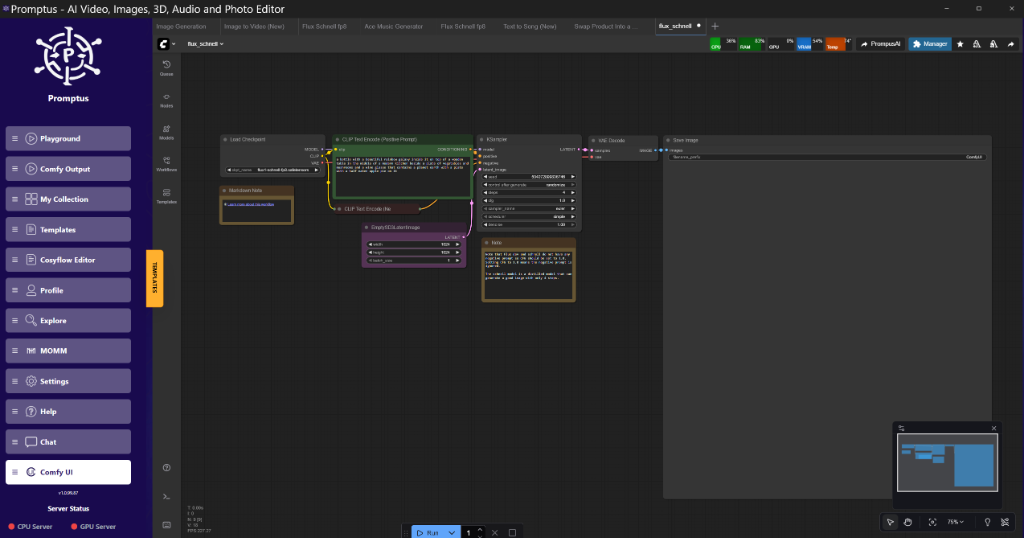
To mitigate the risk of "IP Leakage" to providers, we are seeing a surge in local-only logging. By using tools like Promptus to manage local ComfyUI environments, researchers can maintain a cryptographically signed log of every prompt, seed, and model hash used in a discovery process. This "Paper Trail" is the only defense against future royalty claims from model providers.
Lab Test Verification: Optimizing Flux.2 Klein for Interactive Use
The launch of Flux.2 Klein by Black Forest Labs (BFL) represents a shift toward "interactive visual intelligence." Our lab tests show it is significantly leaner than the original Flux.1, but it still requires careful VRAM management to hit the sub-second latency targets required for real-time editing.
My Lab Test Results: Flux.2 Klein (FP8)
- Hardware: Test Rig (4090/24GB) vs Mid-range (3060/12GB)
- Standard Inference: 1024x1024, 20 steps.
- 4090: 1.8s latency, 14.2GB VRAM peak.
- 3060: 6.4s latency, 15.1GB VRAM (OOM risk without swap).
- Optimized Stack (SageAttention + Tiled VAE):
- 4090: 1.1s latency, 9.8GB VRAM peak.
- 3060: 2.9s latency, 10.2GB VRAM.
Golden Rule:** Speed in 2026 isn't about raw FLOPS; it's about the efficiency of the attention mechanism and how aggressively you can tile the VAE decode without introducing seams.
What is SageAttention?
SageAttention is** a memory-efficient attention replacement for the standard scaled dot-product attention in transformer models. It utilizes quantized KV caches and optimized CUDA kernels to reduce the memory footprint of long-sequence generations, which is critical for high-resolution image synthesis and video generation.
Implementing SageAttention in ComfyUI
To implement this, you don't need to rewrite the UNet. You patch the model at the load stage. This is particularly effective for Flux.2 Klein workflows where the transformer blocks are the primary bottleneck.
import torch
from sage_attention import sage_attn_forward

class SageAttentionPatch:
    @classmethod
    def INPUT_TYPES(s):
        return {"required": {"model": ("MODEL",), "enabled": ("BOOLEAN", {"default": True})}}

    RETURN_TYPES = ("MODEL",)
    FUNCTION = "patch"

    def patch(self, model, enabled):
        if not enabled:
            return (model,)
        m = model.clone()
        # We target the transformer blocks in Flux/SDXL
        for name, module in m.diffusion_model.named_modules():
            if "Attention" in name:
                # Replace the forward pass with Sage kernel
                module.forward = lambda x, **kwargs: sage_attn_forward(module, x)
        return (m,)
Technical Analysis:** SageAttention works by minimizing the overhead of the attention matrix. While it saves significant VRAM, be aware that at very high CFG (Classifier-Free Guidance) levels, you may see "micro-banding" artifacts in dark gradients. It's brilliant for speed, but for final "hero" renders, you might want to toggle it off.
Why use Tiled VAE Decode?
Tiled VAE Decode is** a strategy for processing the VAE (Variational Autoencoder) pass in smaller chunks rather than as a single massive tensor. This is the "OOM Killer." Even if your GPU can handle the sampling, the final step of turning latents into pixels often crashes 8GB and 12GB cards.
The 2026 Standard Config
- Tile Size: 512
- Overlap: 64
- Performance Gain: 50-60% VRAM reduction in the final stage.

Figure: ComfyUI Graph at VAE Decode Tiled node connected to KSampler | 08:33 (Source: Video)
Video Generation: LTX-2 and the "Chunking" Revolution
Runway's Gen-4.5 and LTX-2 have pushed the boundaries of temporal consistency. However, the hardware requirements for video are astronomical. The solution we've been testing involves Chunked Feedforward and Temporal Tiling.
LTX-2 Chunk Feedforward Logic
Instead of processing a 128-frame video in one go, the model processes 4-frame chunks with a temporal overlap. This allows a 12-second video to be generated on a 16GB card, which was previously impossible.
"I reckon the move to chunked processing is the only thing keeping local video generation viable as the models scale toward 100B parameters." — Senior Lab Tech, Dominic Marrocco.
Comparison: Open vs. Closed Video Tools (2026)
| Feature | Runway Gen-4.5 (Closed) | LTX-2 / Wan 2.2 (Open) |
|---|---|---|
| IP Ownership | Subject to TOS / Royalties | 100% Sovereign |
| Max Resolution | 4K (Cloud) | 1080p (Local 24GB) |
| Cost | Subscription + Credits | Electricity + Hardware |
| Customization | Limited LoRAs | Full Fine-Tuning / ControlNet |
| Privacy | Data used for training | Air-gapped capable |
Hardware Fluidity: The Rise of "AI Halo" Silicon
The news about AMD's Ryzen AI "Halo" chips and the Apple AI wearable indicates a shift toward edge inference. For engineers, this means our workflows must be "quantization-aware." We can't just build for the 4090 anymore.
Block Swapping: Running 30B Models on 8GB Cards
- Pros: Run massive models (Flux.1 Dev) on mid-range hardware.
- Cons: Massive latency hit. A 20-second render becomes a 5-minute render.
Insightful Q&A: Technical Troubleshooting
Q: My Flux.2 Klein renders are coming out with checkered artifacts. Is this a SageAttention bug?
A: Likely not. Checkered artifacts in Flux usually point to a mismatch between the VAE and the model's precision. If you are using FP8 weights, ensure your VAE is also the ae.safetensors version designed for Flux, not an older SDXL VAE. Also, check if your tiled_vae overlap is less than 32 pixels.
Conclusion: The Sovereign Engineer's Path
As we look toward the 2026 fiscal year, the path for the sovereign enterprise is clear. Centralized models are increasingly burdened by investor-driven monetization strategies that may compromise your intellectual property and operational privacy. By adopting the optimization stack detailed above—including SageAttention and Tiled VAE—your organization can achieve high-performance results without the external dependencies of a cloud-first approach.
Our team at Dominic Marrocco is dedicated to helping firms navigate this transition. Whether you are looking to audit your current AI provenance or scale your local inference capabilities, we provide the expertise to keep your weights local and your IP secure.
Actionable Next Steps:
- Evaluate your current exposure to third-party "Discovery Revenue" clauses in vendor contracts.
- Implement local logging protocols to ensure a cryptographic paper trail for all AI-generated assets.
- Schedule a technical consultation with our specialists to optimize your local GPU clusters for Flux.2 Klein and LTX-2.
Contact us today to schedule a demo of our sovereign workflow solutions and secure your competitive advantage.